

Is the Union Worth It?
I’ve seen a lot of complaints about how much the union takes out of our checks. Worse, I’ve seen people say they were either told the union was mandatory or were automatically signed up without being told it was something they’d be paying for. I’m not going to gloss over that. Those are legitimate grievances, and if that happened to you, you were wronged. Being misled about where your money goes — or not given the choice at all — is not okay, full stop. I hear those complaints, I understand them, and I’m not here to gaslight anyone about it.
But I also want to tell you what happened to me when I actually needed my union. Because I almost didn’t know to call them. And that would have been a disaster.
How I Joined — and Then Forgot About It
When I signed on with IHSS, I did join the union. I knew there was a charge for it. But I also knew enough from high school history that companies that don’t want to pay fair wages and benefits fight unions hard — and that people have fought and sacrificed so that we’d have the right to organize. That was enough for me. I signed up and then, honestly, forgot about it.
I’d get a phone call or email from UDW once or twice a year about a local event and think: I don’t have time for this. We’re caregivers. We work long hours, often with nobody to back us up. Events are too early, too far, too inconvenient. If you’d asked me whether I was in the union, I’d have said yes — but paying dues out of my paycheck was my entire level of participation.
That went on for more than a decade.
The Crisis I Didn’t See Coming
A few years ago, my family added a new IHSS client. My mother-in-law had reached a point where she needed help, and because my son Tom — who has Coffin-Siris Syndrome — is at maximum hours with me as his caregiver, it required a waiver for me to also assist her. Somewhere in that process, there was an error.
The first two pay periods were fine. Then I got a violation on the third. I filled out the paperwork, called the social worker, was told it had been corrected, and the violation was removed a few weeks later.
Then I got two more violations on the same supposedly fixed issue.
The social worker stopped returning my calls. One violation was removed, but apparently I’d received another — and because I’d never gotten the paperwork in the mail, I’d missed the response deadline. One more violation and I’d be suspended for three months. No income. No food. No utilities for my family.
I called the local office more than 40 times over a three-week period. They answered once, told me to talk to the social worker, and responded to one message saying they couldn’t help me. I started calling state offices in desperation. Someone there referred me to the union.
I had completely forgotten that this is exactly what the union is there for.
The Call That Changed Everything
I had kept notes as the situation got worse — dates, names, what was said, what wasn’t. I shared those with my union rep. A few days later, we did a two-party call with the local IHSS office. They answered. They had answers for almost everything I’d needed to know for weeks. They told me what I needed to do next.
The next day, the local office called back and insisted they couldn’t do what they’d said they could — and that they’d never said it at all.
I called my union rep immediately.
They had recorded the call from the day before. Of course they had. My rep called the office, and then let me know it was taken care of.
It was.
Every penny I’d ever paid in union dues paid for itself right there.
Sacramento — and Seeing What I’d Been Missing
A few years later, I got an email about a state union protest in Sacramento. The governor had proposed capping IHSS provider hours at 50 per week — down from 70. The people most affected by that cap were caregivers serving older adults and people with the most complex care needs — those whose approved care plans exceed 200 of the 283 maximum monthly hours. In other words, it would have punished the most vulnerable people in the program, and the caregivers who make their lives possible.
I went. It was my first union event, and I was absolutely blown away.
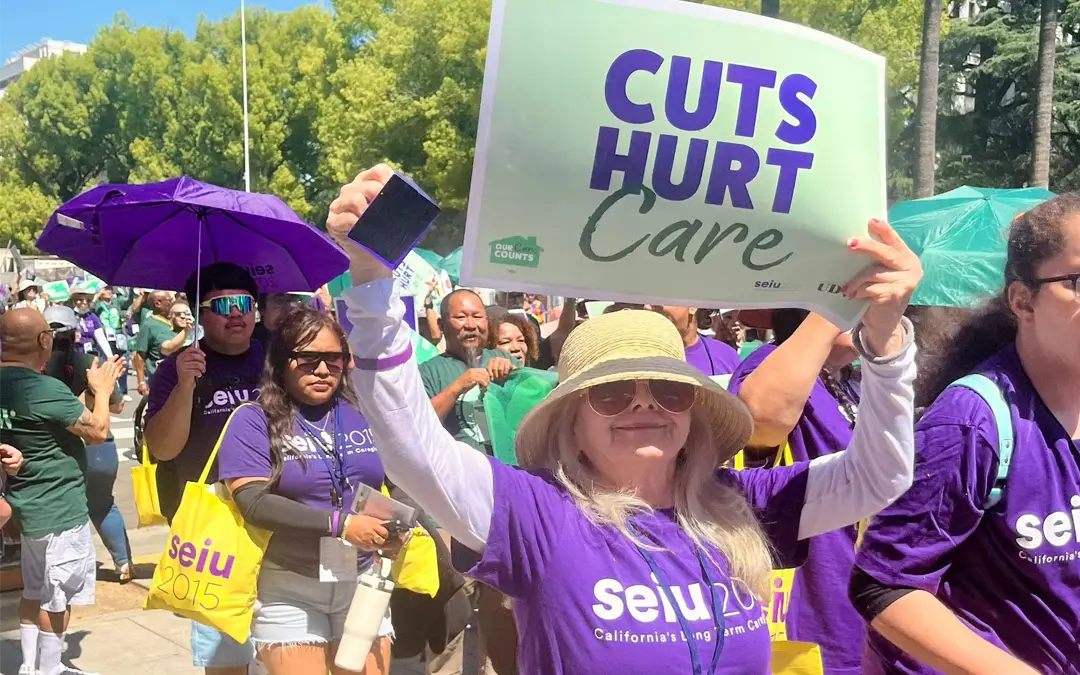
On June 4, 2025, thousands of long-term care workers — members of UDW and SEIU 2015 — gathered at the California State Capitol for the “Care Counts” rally. I had no idea how many of us there were. I had no idea how organized and supported we were. But how would I have known? I’d never shown up for anything.
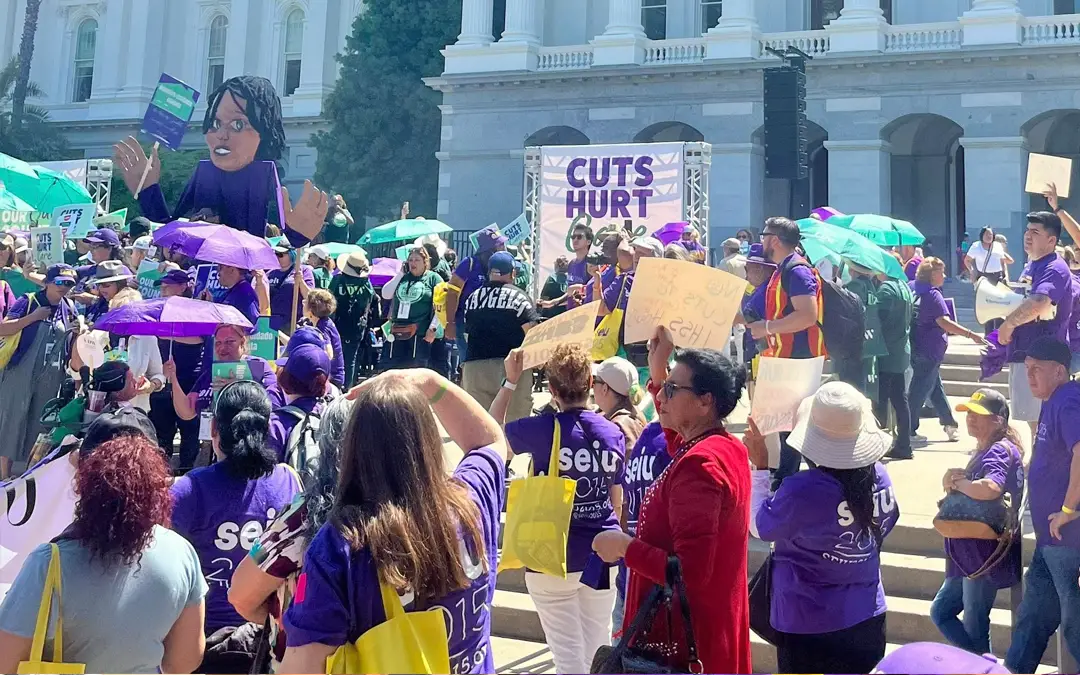
Following that rally and the intense advocacy that came with it, the California Legislature rejected the proposed cap on IHSS overtime hours in the final budget negotiations. The unions also fought back against a proposal to reinstate Medi-Cal asset limits — which would have forced older adults and people with disabilities to spend down their savings to near zero to qualify for services — and against the elimination of the Workforce and Quality Incentive Program designed to improve nursing home standards.
That’s what the union does when we show up.
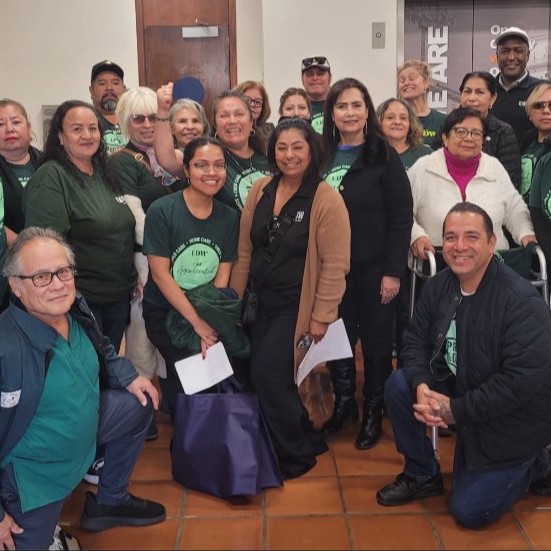
After Sacramento, I was contacted by my local union branch looking for caregivers willing to speak before the Santa Barbara County Board of Supervisors — the people who decide our wage contract. I said yes.
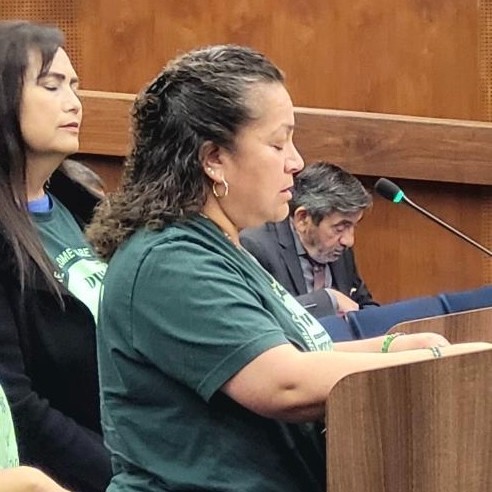
It was one of the most important things I’ve done as a caregiver. And it led to something worth celebrating.
The “Help” That Isn’t
You may have seen websites or mailers offering to help you opt out of paying union dues — for free, out of the goodness of their hearts. The most prominent one targeting IHSS caregivers is optouttoday.com.
It is not run by altruists.
Opt Out Today is a project of the Freedom Foundation, a Washington State-based organization funded by some of the wealthiest conservative donors in the country — including the Koch family foundations, the Sarah Scaife Foundation, the Bradley Foundation, and Donors Trust. The Freedom Foundation has stated openly that its goal is to “batter the entrenched power of left-wing government union bosses.” Over approximately seven years, they invested more than $35 million specifically in anti-union opt-out campaigns targeting public employees across California, Washington, and Oregon. To build their contact lists, they have used public records laws to collect caregivers’ personal information — names, home addresses, dates of birth — without consent.
They aren’t helping you keep your money. They’re helping themselves dismantle the only organized voice IHSS caregivers have. And they’re doing it because well-funded unions stand in the way of the policy agenda their donors want — lower wages, privatized services, and less worker protection across the board.
You are absolutely legally entitled to opt out of union dues. That is your right, and nobody should pressure you either way. But you deserve to know who’s handing you that form and what they actually stand to gain from it.
What the Union Actually Does
You don’t see what the union does if you don’t participate. I lived that for over a decade.
They negotiate our contracts. They fight hour caps in Sacramento. They show up to county board meetings. They record phone calls with government offices that deny saying what they said. They connect isolated caregivers to a community of hundreds of thousands of people doing the same work, facing the same walls.
Are the dues perfect? Is every dollar spent exactly how I’d spend it? No. No organization is. There are legitimate questions about how union money gets used, and those questions deserve honest answers — not dismissal. But when I was facing suspension and couldn’t get a single person at the county to call me back, one phone call to my union rep changed everything.
That’s not nothing. That’s everything.
Have a union story — good or bad? Drop it in the comments. The more we talk about this, the better informed we all are.
Helpful Links
Your Unions
- United Domestic Workers of America (UDW) — representing over 200,000 home care and child care providers across California; if you’re an IHSS provider, this may be your union
- SEIU Local 2015 — California’s largest long-term care worker union, representing over 400,000 caregivers statewide
- Join UDW — information on joining, member benefits, trainings, and the UDW credit union
The Santa Barbara Wage Fight
- Santa Barbara County IHSS Wage Crisis: A Call to Action — the full story, data, and contact information for supervisors
- Behind the Numbers: The Human Cost of Poverty Wages — continued coverage of the SB county battle
Know Your Rights
- Disability Rights California — free legal advocacy for Californians with disabilities; also a resource if you’re facing IHSS violations or denials
- California IHSS Program — CDSS — official state program information, provider enrollment, and policy

0 Comments